
Your Guide to Heating & Cooling
Given how cold it is here in the midwest, we thought it would be a good idea to provide some information about heating and cooling!
We often take for granted the equipment that works year-round to keep us comfortable - until we wake up and its 51 degrees outside and our kitchen tile is too cold to stand on! Although that equipment may be out-of-sight and out-of-mind, let's give it some thought right now. The moment our home's HVAC equipment starts to show signs of trouble, we panic. It happens at the worst time possible and when we least expect it. Maybe the furnace quits working while we're out of town and we come home to a huge mess from pipes that burst. Or, the air conditioner dies during a record-breaking heat wave, making it unbearable inside our home. In any case, understanding how HVAC equipment works may help to keep us safe from extreme weather, but also from scammers looking to take advantage. When the time inevitably comes for a replacement, you'll be prepared to select the best HVAC equipment for your home.
What Does HVAC Mean?
The term "HVAC" is an acronym that stands for: Heating, Ventilation, and Air Conditioning. These three important tasks keep your home pleasant by regulating temperature, humidity, and air quality. HVAC equipment differs depending where you live. For most of the country, a central air conditioner/furnace combination is the most common. In warmer climates, heat-pumps/air handlers and packaged units tend be more prevalent.
What's Central Forced-Air Exactly?
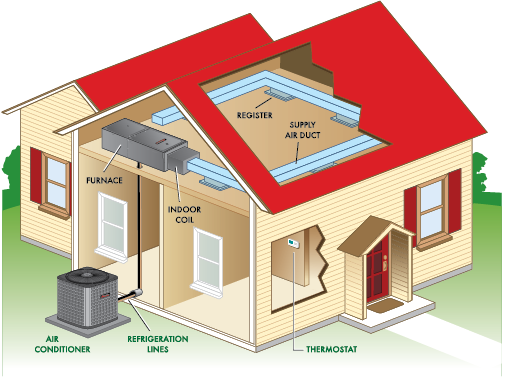
A forced-air system is best characterized by the series of ducts running throughout the home. Most equipment is installed in a central location within the house that forces the air throughout; hence the name: Central Forced-Air.
Basic components that make up home heating and cooling systems differ throughout the country.
Gas Furnace Air-Handler Air Conditioner Heat Pump Packaged Unit (an all-in-one a/c and furnace unit) The supply air ducts run from the blower (inside centrally-located furnace or air handler), and terminates at individual registers throughout the home.
The return ducts balance the system out with strategically placed vents that feed back into the furnace or air handler where unconditioned air is re-conditioned and circulated again.
This type of system is very efficient because it allows for a rapid exchange rate of air that conditions and cleans the air in your home.
Types of Central HVAC Equipment
There are 4 main types of central forced-air heating and cooling systems: Central Furnace Central Air Conditioner Heat Pumps Packaged Units